Bleeding gums: Why does it happen and when should you see a dentist?
Bleeding gums can be a sign of inflammation or another underlying problem. Learn why gums bleed, how to prevent the condition from progressing, and when to see a dentist.
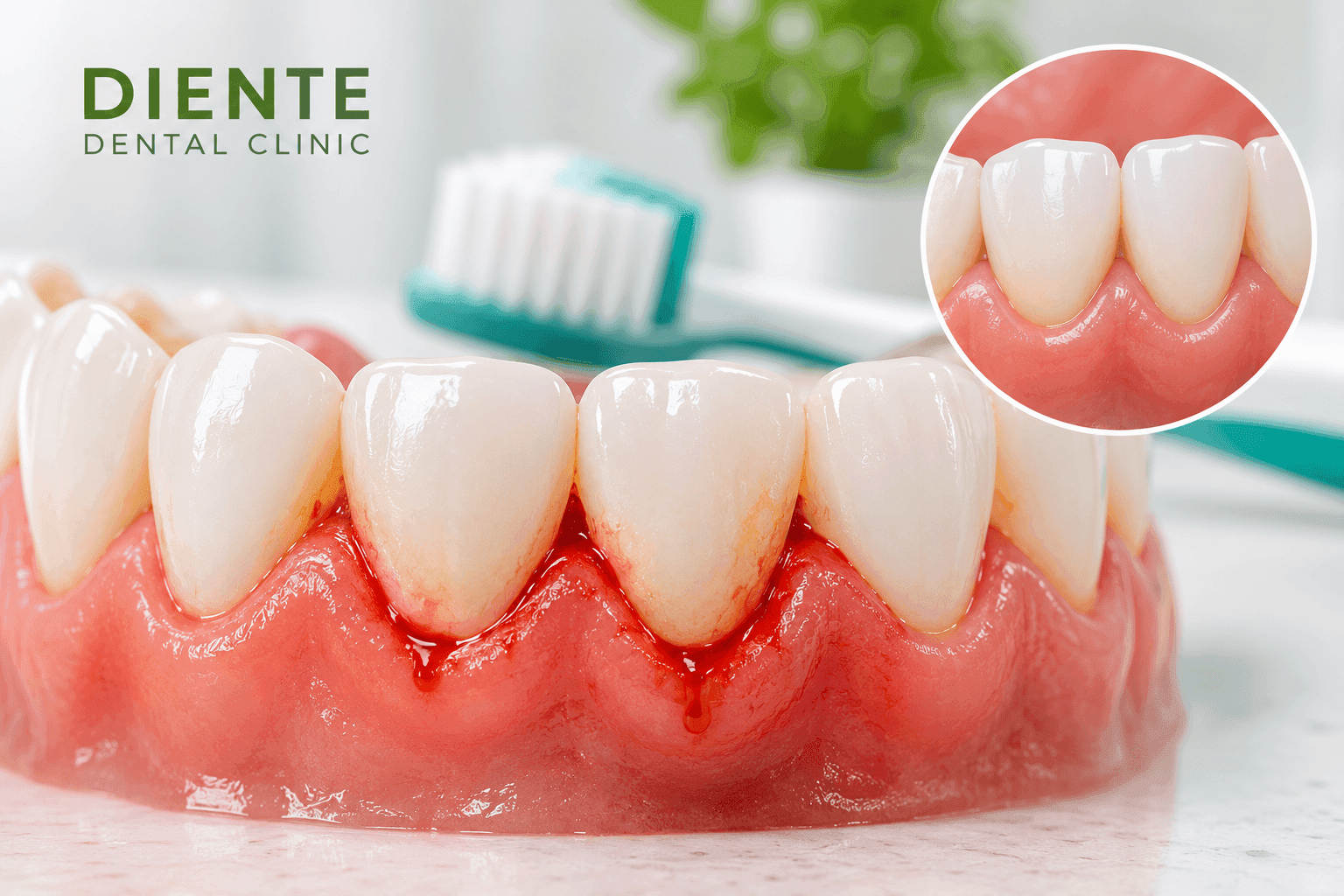
Why do gums bleed?
One of the most common causes is the accumulation of dental plaque. Bacterial plaque that builds up on tooth surfaces and along the gumline can irritate the gums, causing inflammation, redness, swelling, and bleeding. This condition is known as gingivitis.
If inflammation is not addressed in time, it may progress in some cases to periodontitis, affecting the tissues and bone that support the teeth.
Bleeding can also be associated with other factors, including brushing too aggressively, hormonal changes during pregnancy, diabetes, smoking, or the use of certain medications. Identifying the cause requires evaluating not only the condition of the gums but also the patient's overall health.
What are the main signs of gum inflammation?
Gum inflammation does not always cause pain. Look out for the following signs:
Bleeding when brushing your teeth or flossing.
Redness, swelling, or tenderness of the gums.
Persistent bad breath or an unpleasant taste in the mouth.
Gum recession or loose teeth.
The presence of any of these signs does not necessarily confirm a specific diagnosis, but a dental examination is important to identify the underlying cause.
How is bleeding gums treated?
Treatment depends on the cause of the bleeding and the severity of gum disease. If the problem is caused by plaque and tartar buildup, professional dental cleaning and guidance on proper oral hygiene may be necessary.
More advanced periodontal conditions may require additional examinations, deep cleaning below the gumline, or other professional procedures. Therefore, the appropriate treatment is determined only after a dental examination.
How can you prevent gum bleeding?
Maintaining healthy gums requires proper daily oral hygiene:
Brush your teeth twice a day using fluoride toothpaste and a soft-bristled toothbrush.
Clean between your teeth daily using dental floss or an appropriate interdental brush.
Avoid brushing too aggressively, as this can damage your gums.
Visit your dentist regularly for examinations and preventive care when needed.
If you smoke or have diabetes, inform your dentist, as these factors can affect gum health.
If your gums bleed, do not stop cleaning them gently and regularly. Inadequate oral hygiene can make inflammation worse. However, if the bleeding persists or occurs repeatedly, you should consult a dental professional.
Frequently asked questions
Is bleeding gums always a sign of gingivitis?
No. Gingivitis is one of the most common causes, but bleeding can also be associated with other factors. The exact cause can be identified through a dental examination.
Can I have a gum problem even if there is no pain?
Yes. Inflammatory gum diseases may develop without noticeable pain, especially in their early stages. This is why bleeding should never be ignored.
Can professional dental cleaning stop gum bleeding?
If the bleeding is caused by plaque and tartar buildup, professional cleaning can be an important part of treatment. However, the results also depend on the condition of the gums and proper daily oral hygiene afterward.
Consult a dental professional to maintain healthy gums
If you notice bleeding gums, do not postpone your dental appointment. An early examination helps identify the problem in time and determine the most appropriate approach.
Diente Dental Clinic is a dental clinic located in Artashat, where you can receive professional consultation and have the condition of your teeth and gums evaluated.
The clinic offers free consultations and complimentary X-ray examinations when deemed necessary by the dentist.
Address: 75/3 August 23 Street, Artashat
Phone: 055 665 488
Website: diente.am
Book a consultation at Diente Dental Clinic and take care of your gum health.