Dental Plaque and Tartar: What Is the Difference and Why Should They Be Removed?
Dental plaque and tartar are not the same thing. Learn how plaque turns into tartar, what problems it can cause, and why professional dental cleaning is important.
Dental Plaque and Tartar: What Is the Difference and Why Should They Be Removed?
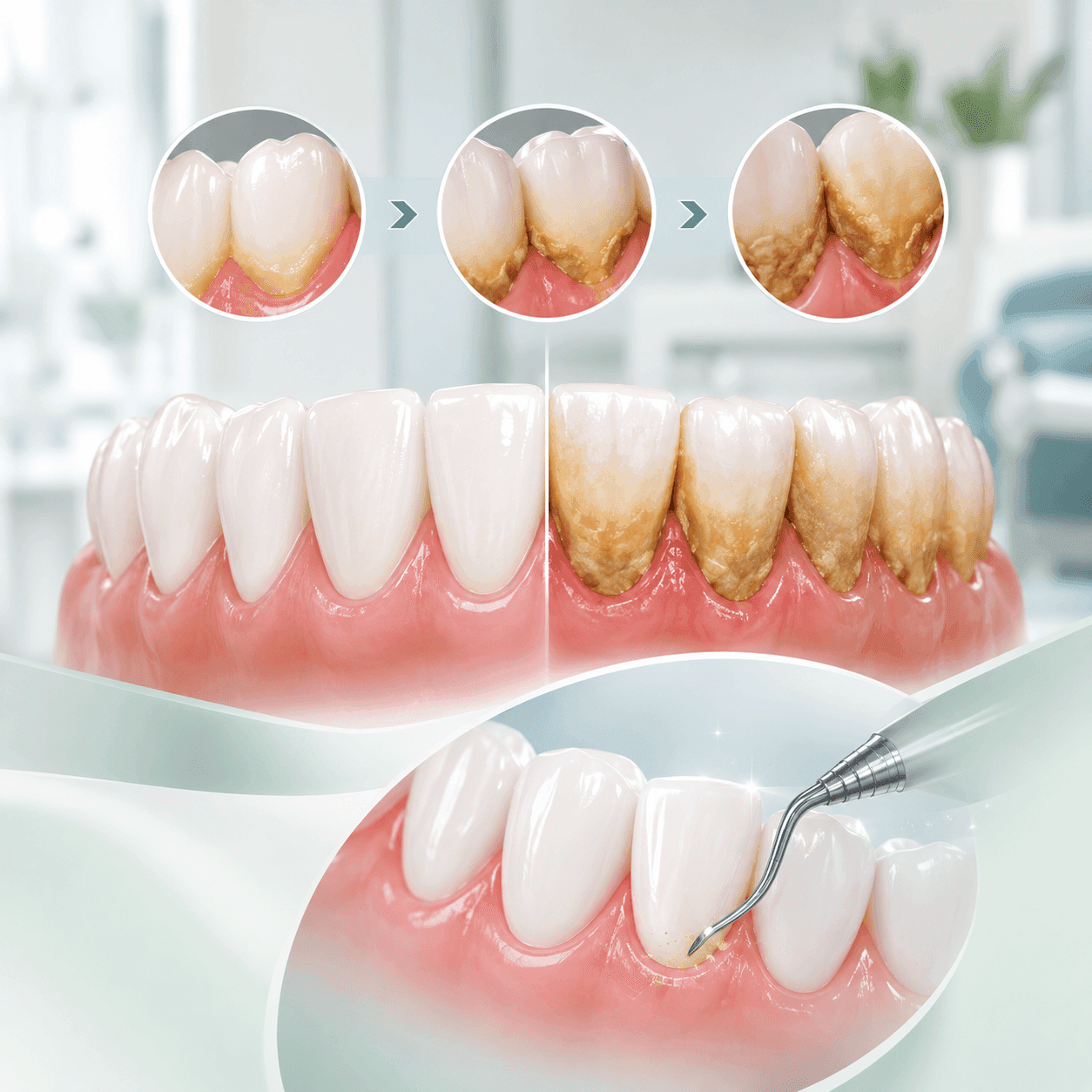
A soft, almost invisible layer can sometimes form on the teeth. Over time, this layer can harden into a deposit that can no longer be removed with a regular toothbrush.
These are dental plaque and tartar. Although both are associated with inadequate oral hygiene, they are not the same and require different approaches.
Removing plaque in a timely manner is important not only for keeping teeth clean and maintaining their appearance, but also for preventing tooth decay and gum problems.
What Is Dental Plaque?
Dental plaque is a soft, sticky film that forms on the surface of the teeth. It consists mainly of bacteria, food particles, and other components found in the mouth.
Plaque forms continuously, especially after eating. If the teeth are not cleaned properly and regularly, plaque can accumulate on the tooth surfaces, particularly along the gumline.
Plaque is not always easy to see. Sometimes it can be almost invisible, but that does not mean it is harmless.
The bacteria in dental plaque can contribute to the production of acids. These acids can damage tooth enamel and contribute to the development of tooth decay.
How Does Tartar Form?
If plaque is not removed regularly, it can gradually harden due to the minerals present in saliva. This hardened deposit is known as tartar, or dental calculus.
Tartar is much harder than plaque and cannot be completely removed with a regular toothbrush or dental floss.
It can form on visible tooth surfaces, along the gumline, and in some cases below the gumline.
The Main Difference Between Plaque and Tartar
Simply put, plaque is a soft film, while tartar is hardened plaque.
Plaque can be removed through proper and regular oral hygiene, including brushing the teeth and cleaning between them with appropriate interdental cleaning tools.
Once tartar has formed, however, it requires professional removal.
That is why it is important not to allow plaque to remain on the teeth for a long time and harden.
Why Is Tartar Harmful?
Tartar is not merely an aesthetic concern. It can create conditions that make it easier for new plaque to accumulate, while also irritating and inflaming the gums.
The presence of tartar may be associated with:
red gums,
swollen gums,
bleeding while brushing,
bad breath,
gum sensitivity.
If gum inflammation is left untreated for a long time, it can become more severe and affect the tissues surrounding the teeth. For this reason, bleeding gums should not simply be considered “normal.”
Can Tartar Go Away on Its Own?
Usually, no. Tartar is a hardened deposit, and attempting to scrape it off at home with sharp objects or other mechanical tools can be dangerous. Such attempts may damage the teeth or gum tissue.
Tartar should be removed by a dental professional using appropriate instruments and techniques.
What Is Professional Dental Cleaning?
During a professional dental cleaning, a dentist or dental hygienist removes tartar and deposits that cannot be completely removed through home oral hygiene.
Professional cleaning may also include the removal of soft deposits and surface staining from the teeth. When appropriate, Air Flow may also be used to remove soft deposits and surface stains from the tooth surfaces.
Professional cleaning does not replace daily oral care. Its purpose is to complement home hygiene and clean areas that are difficult to reach at home.
Does Tartar Removal Damage Tooth Enamel?
Properly performed professional cleaning is not intended to damage healthy tooth tissue.
Many people notice that their teeth feel smoother after tartar removal. Sometimes the teeth may also feel “lighter” or slightly more sensitive. This can be related to the removal of previously accumulated deposits and the condition of the gums.
If sensitivity persists after cleaning or is significant, you should inform your dentist so that the cause can be evaluated.
How Can Plaque and Tartar Buildup Be Prevented?
It is not always possible to completely prevent tartar formation because its development can also be influenced by the composition of saliva and individual factors. However, proper oral care can significantly reduce its buildup.
It is important to:
brush your teeth twice a day,
use fluoride toothpaste,
clean between your teeth every day,
pay attention to the gumline,
limit frequent consumption of sugary foods and drinks,
visit your dentist regularly,
have professional dental cleanings when necessary.
Why Is It Important to Remove Tartar Along the Gumline?
Tartar often accumulates along the gumline, where cleaning thoroughly at home can be difficult.
The presence of deposits in this area can contribute to persistent gum irritation. If you notice that your gums frequently bleed when brushing, or that they are swollen or red, this is a reason to see a dentist.
Simply removing the tartar is sometimes not enough. The dentist should also assess the condition of the gums and determine whether additional treatment or a more detailed examination is needed.
When Should You See a Dentist?
Professional cleaning should not be viewed only as a way to whiten the teeth or improve their appearance.
You should consider seeing a dentist if you notice:
hard yellowish or brown deposits on the teeth,
bleeding gums when brushing,
red or swollen gums,
bad breath,
deposits between the teeth or along the gumline,
changes in tooth color or surface staining.
Your dentist will assess the overall condition of your mouth and, if necessary, recommend appropriate cleaning or treatment.
Frequently Asked Questions
Are dental plaque and tartar the same thing?
No. Dental plaque is a soft, sticky film that forms on the teeth. If it is not removed in time, it can harden and turn into tartar.
Can tartar be removed at home?
Once tartar has formed, it cannot be completely removed with a regular toothbrush. Attempting to scrape it off yourself can damage the gums or the tooth surface. Tartar should be removed by a dental professional.
Is tartar only an aesthetic problem?
No. Tartar can contribute to plaque buildup, gum irritation, and inflammation, which is why it is important to have it assessed and removed in a timely manner.
How often should I have a professional dental cleaning?
There is no single recommended frequency that applies to everyone. It depends on oral hygiene, how quickly tartar builds up, gum health, and other individual factors. Your dentist can determine the appropriate frequency based on an examination.
Can I develop tartar even if I brush my teeth every day?
Yes. Proper oral hygiene significantly reduces plaque and tartar buildup, but some people may develop tartar more quickly due to the composition of their saliva and individual factors.